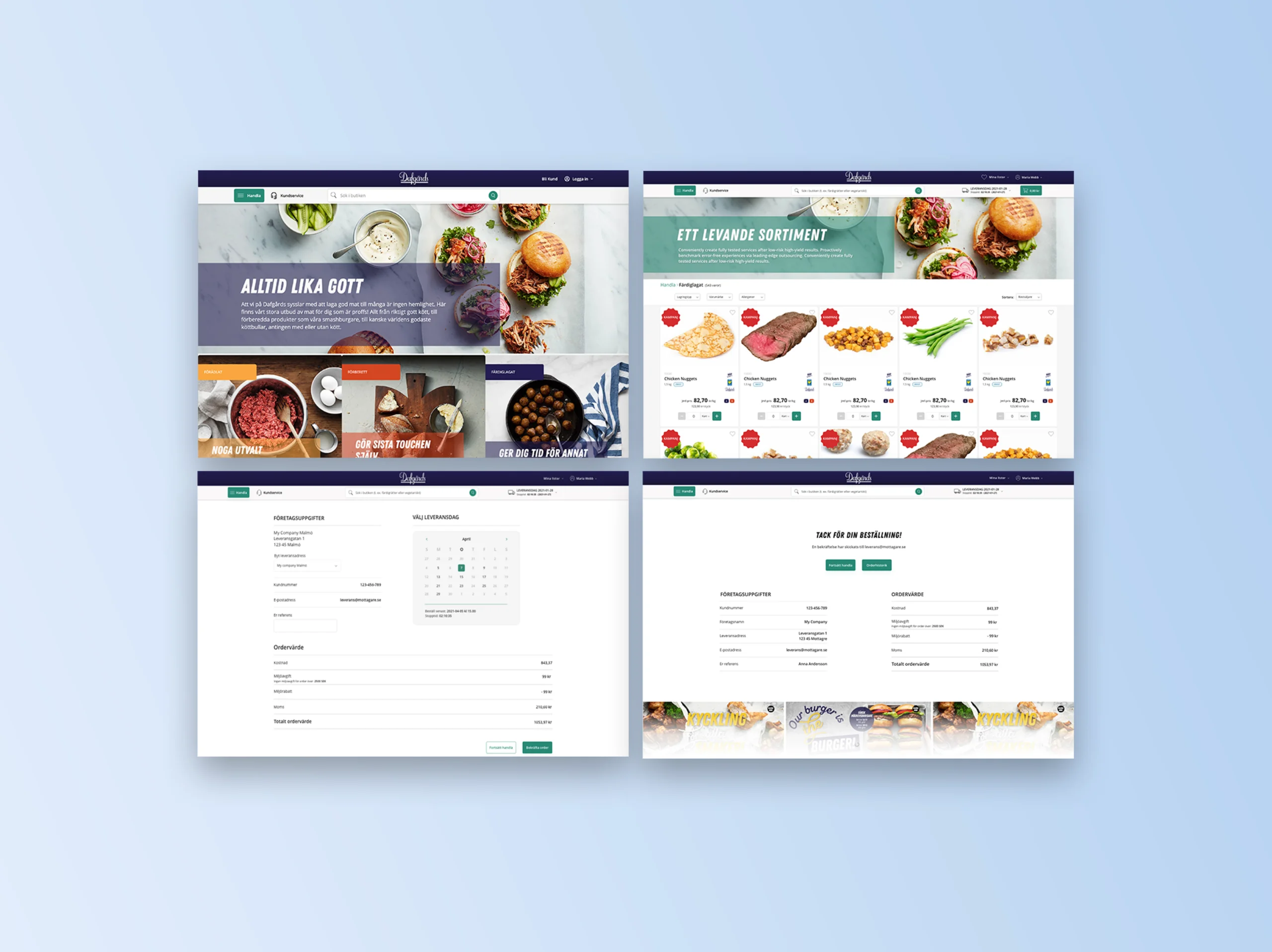
Dafgård Foodservice
Dafgårds Foodservice offers an e-commerce platform for restaurants and commercial kitchens with recurring purchases.
The project was launched based on the hypothesis that the user experience within the ordering process could be improved.
Research revealed that the challenge did not lie in the interface – but rather in the fact that the platform did not support users’ actual work processes.
The project was launched based on the hypothesis that the user experience within the ordering process could be improved.
Research revealed that the challenge did not lie in the interface – but rather in the fact that the platform did not support users’ actual work processes.
My role
I was responsible for:
- Planning and conducting user interviews
- Analysing and synthesising insights
- Developing personas and scenarios
- Translating insights into concepts and wireframes

Goal
Deliver a visually appealing and reliable platform that would attract B2B customers while offering the simplicity and usability of a B2C site, with a mobile-friendly design focused on a streamlined purchasing experience to increase average order value and sales volume.
Challenge
The initial focus was on optimising navigation and the purchasing process.
But one key question was missing:
How do users actually go about making purchases – and what role does the platform play in that process?
But one key question was missing:
How do users actually go about making purchases – and what role does the platform play in that process?
Process
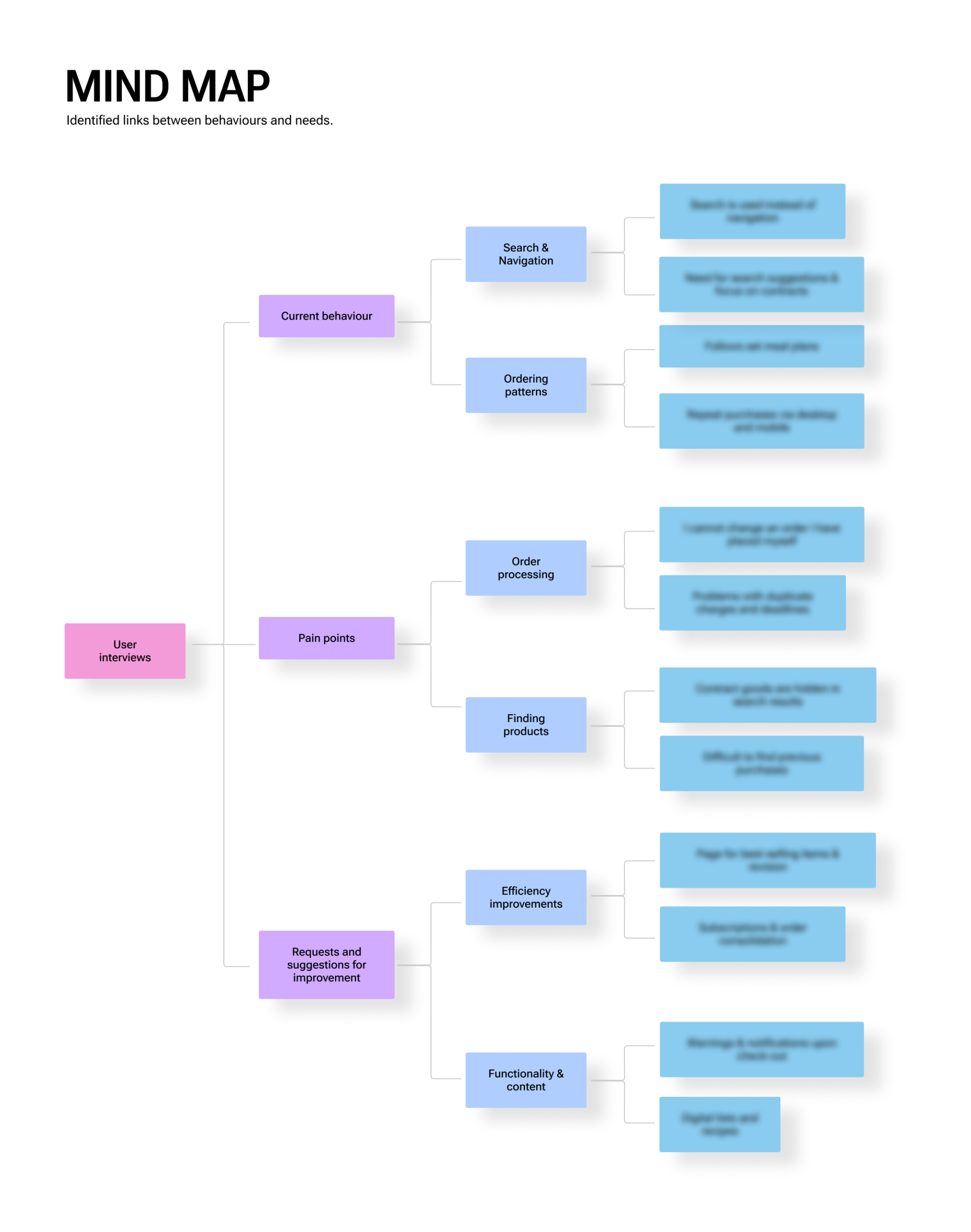
I conducted thorough market and user research, including interviews with restaurant managers, to understand customer needs and purchasing behaviors, which informed the design approach.
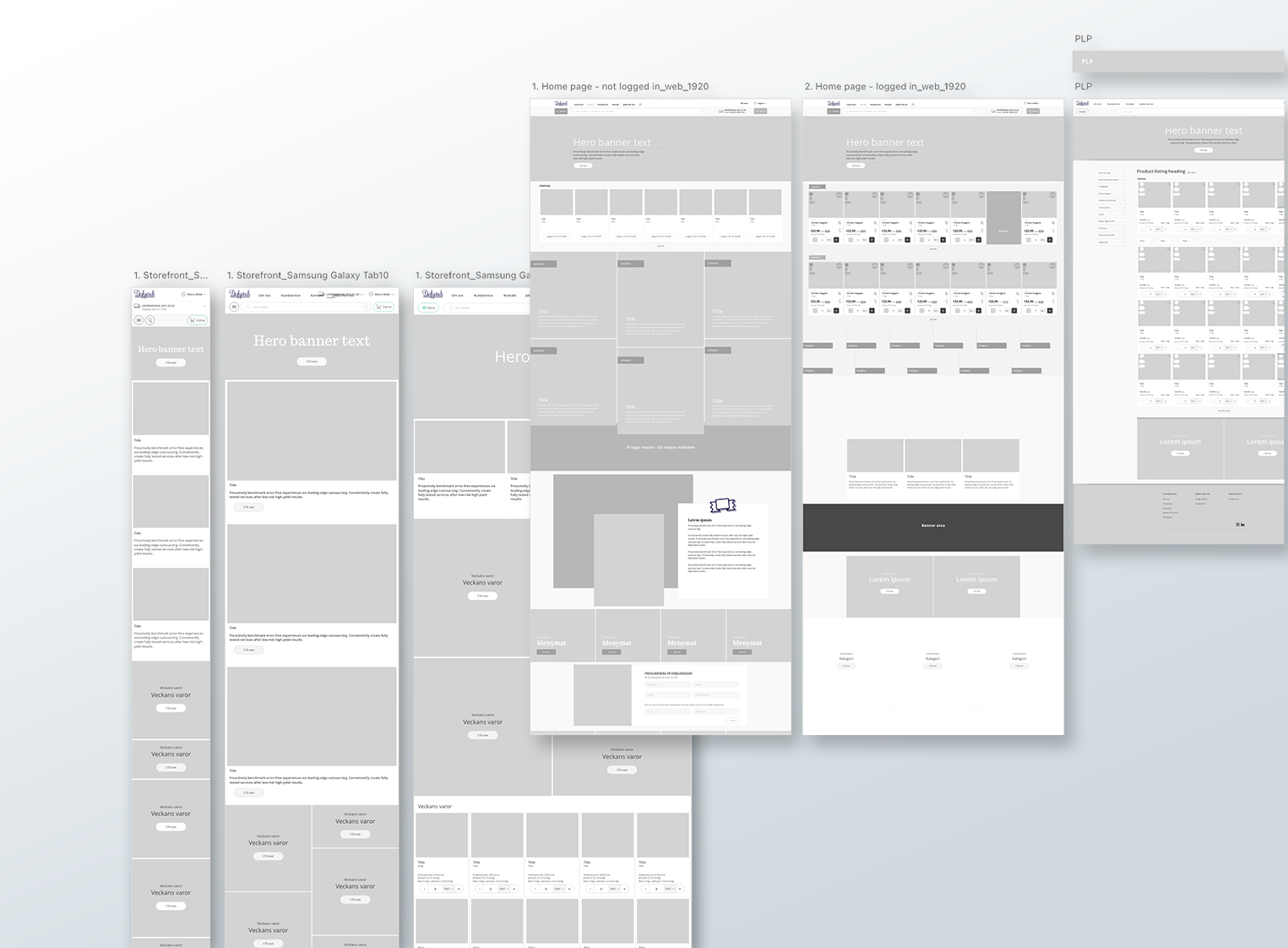
I conceptualized wireframes, mockups, and prototypes, refining structure and functionality for an intuitive user experience. Collaborated closely with the development team to implement the design to high UX/UI standards and aligned with product owners to prioritize features and create a business-aligned product roadmap.
I conceptualized wireframes, mockups, and prototypes, refining structure and functionality for an intuitive user experience. Collaborated closely with the development team to implement the design to high UX/UI standards and aligned with product owners to prioritize features and create a business-aligned product roadmap.
Outcome & Reflection
The project helped to:
- Redefine the problem from an interface perspective to a workflow perspective
- Prioritise features that support real-world user behaviour
- Create a more relevant basis for decision-making regarding further development
This project changed my perspective on e-commerce in a B2B context.
Rather than optimising interfaces in isolation, it became clear that the greatest potential for improvement lies in understanding and supporting the user’s operational reality.
In this case, it wasn’t about creating a better online shop – but about designing a tool for working efficiently.
Rather than optimising interfaces in isolation, it became clear that the greatest potential for improvement lies in understanding and supporting the user’s operational reality.
In this case, it wasn’t about creating a better online shop – but about designing a tool for working efficiently.